
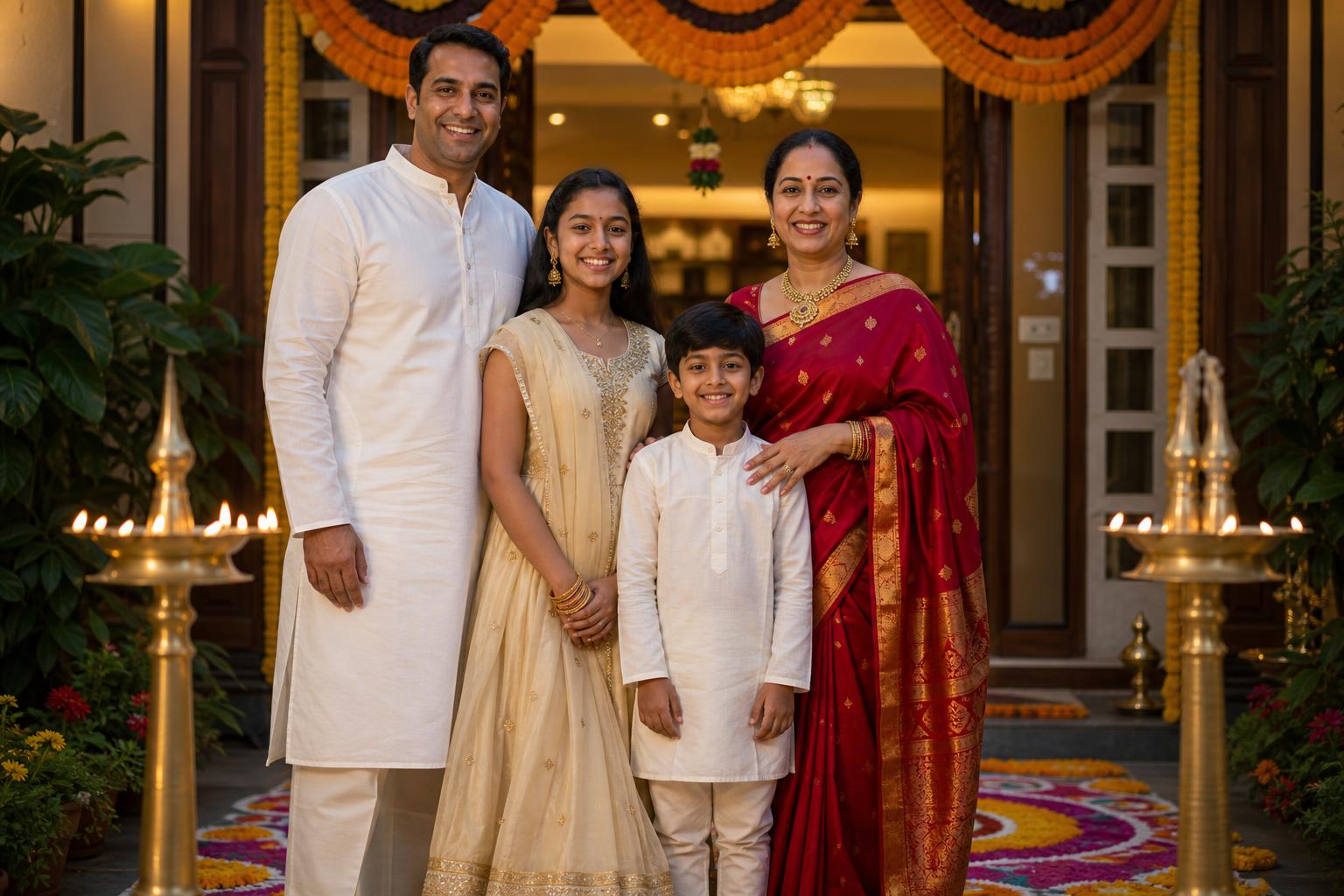
The quiet rituals — the lamp, the milk boil, the first puja — deserve more than phone snaps.
There is a particular kind of light that only happens in Telugu homes during a function — the warm spill of a brass lamp at dawn, the marigold glow against a cream sari, the quiet pride on a father's face as he hands over his daughter. A good photographer does not chase these moments; they wait for them.
When families come to us asking how to plan their wedding photography, we always begin with the same question: which moments do you want to feel ten years from now? Not which pose. Not which location. Which feeling.
Telugu ceremonies are layered. The pelli koduku and pelli kuthuru rituals on day one set the emotional tone. The kashi yatra has a humour to it that needs a photographer who understands the joke. The jeelakarra-bellam moment is sacred — and quick. Miss the frame and it is gone.
Our advice is always the same: hire someone who has shot a Telugu wedding before. Someone who knows when to step into the mandap and when to stay back. Someone who understands that the best photo of the night may be your grandmother laughing at a cousin, not the formal pose under the arch.
Spend on storytelling. Skip the extras. A second cinematographer matters more than a photo-booth. An album you will actually open matters more than a thousand digital files in a folder you forget to back up.
Frequently Asked
Questions families ask us.
How long does housewarming photography take?
Plan for 4–6 hours covering the milk-boil, ganapathi puja, lunch and family portraits.
Do we need a videographer too?
A short cinematic reel of 60–90 seconds works beautifully for griha pravesham. A full film is optional.